Home › Forums › DIY Packrafts › Prototyping inflatable hull shapes

  • Creator
    Topic
  • #22458
    Bern Salzhaus
    Participant

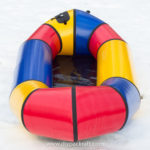
    Hi everyone! I’m new to the forum and totally new to making inflatable boats, but I’m an industrial designer and packrafter with a project in mind that I’m excited to explore.

    My project involves a completely new kind of inflatable hull shape, and I suspect it’ll take a fair amount of trial and error to get it right.

    Before investing the time and materials into a full-size boat, I’d like to experiment with some smaller models using inexpensive materials.

    Has anyone here experimented with prototyping inflatable structures? I’m curious about what materials and construction methods you’ve used. Ideally, I’d like something cheap, relatively quick to fabricate, and easy to iterate on. It doesn’t necessarily need to replicate the final materials or construction methods, just give me a reasonable sense of how the geometry behaves when inflated.

    Apologies if this has already been asked and answered. I searched the forum but couldn’t find any discussions on the topic.

    Thanks in advance for any ideas or experience you can share!

Viewing 4 reply threads
  • Author
    Replies
    • #22645
      oldcanuck
      Participant

      <span style=”color: #000000; font-family: Montserrat; font-size: 15px;”>There are software programs that assist designers to visualize complicated 3D shapes of products made with fabrics. Many industries, not only clothing designers, use them for their simplicity, accuracy and speed. When the designer modifies the 2D pattern pieces, the 3D model changes as well, in real time. CLO3D is the most popular, available online to amateurs as well as professionals. Hope this helps.</span>

      Edit: I made an error recommending another software program that is not applicable for the OP’s use. Deleted.

    • #22644
      oldcanuck
      Participant

      There are software programs that assist designers to visualize complicated 3D shapes of products made with fabrics. Many industries, not only clothing designers, use them for their simplicity, accuracy and speed. When the designer modifies the 2D pattern pieces, the 3D model changes as well, in real time. Marvelous Designer and CLO3D are the most popular, available online to amateurs as well as professionals. Hope this helps.

    • #22470
      Bern Salzhaus
      Participant

      Matt, thank you! This is exactly the kind of advice I was looking for. Agreed that full scale is probably easier to work with than taping up tiny models, and it has the added benefit that I can use my patterns on the real material once I land on a design I’m pleased with. I’ll let you know how it goes.

      -Ben

      • #22474
        Matt (Admin)
        Keymaster

        No problem – sounds great!


    • #22464
      Matt (Admin)
      Keymaster

      For quick prototyping I’ve used clear polyethylene plastic sheeting (sold as vapour barrier for home construction or floor/furniture protection while painting) held together with vapour barrier tape. Both are available at building supply stores (in North America, at least).

      Often making things smaller is significantly more difficult because it’s hard to work around small radius curves, so if you use cheap materials and make it full size then it’ll be easier.

      Obviously I’m biased, but I would avoid the cheap Alibaba TPU fabrics, especially if you intend to use heat to weld them.

    • #22459
      Eli
      Participant

      There are TPU fabric vendors on Alibaba that will sell 20 yards worth for a couple hundred bucks if you reach out and ask (they usually have minimum amount that goes into thousands of dollars).

      • This reply was modified 1 week, 6 days ago by Eli.
Viewing 4 reply threads
  • You must be logged in to reply to this topic.